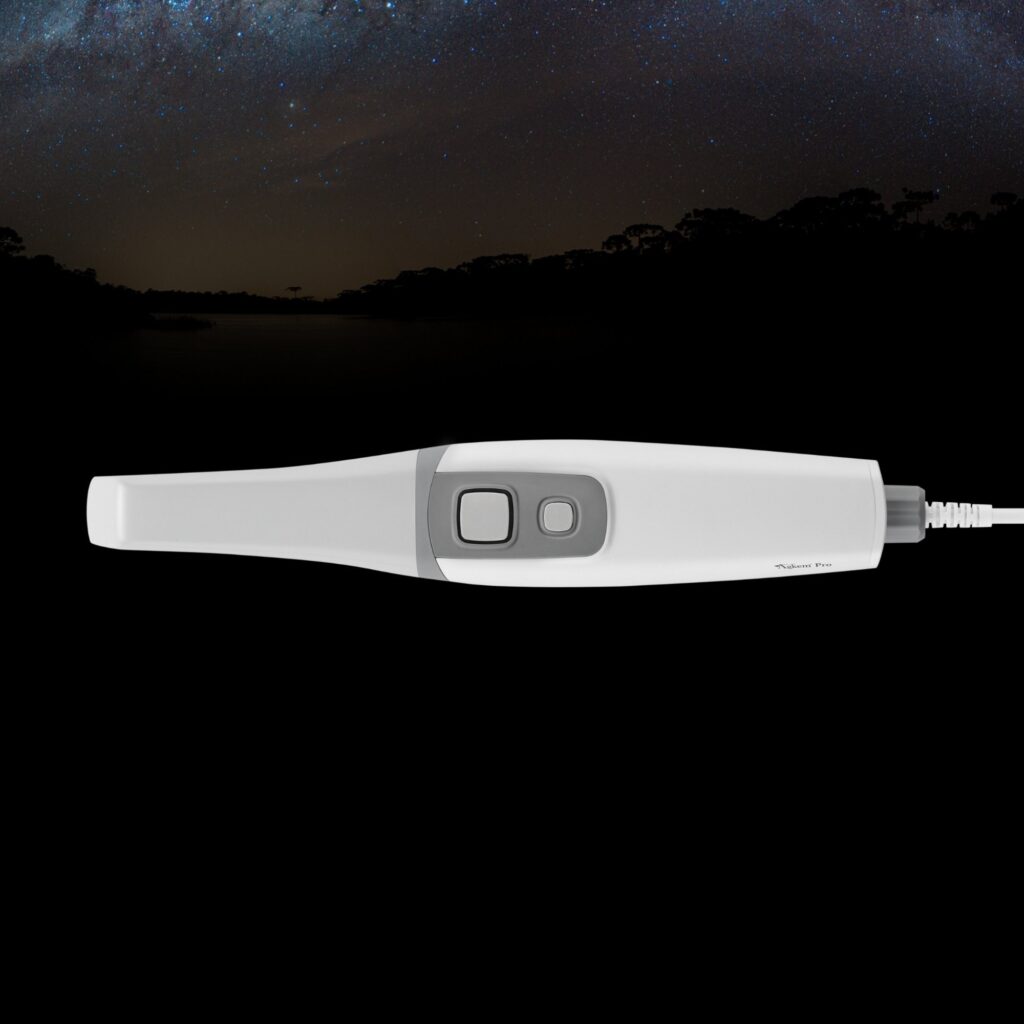
Dental practices are increasingly adopting digital tools to make clinical workflows more efficient and connected. The AGKEM PRO V5 Intraoral Scanner is designed for practices looking to move from conventional impressions to digital workflows. But before choosing a scanner, it is important to understand how an intraoral scanner works, what benefits it offers, and which features matter for everyday dental use.
What Is an Intraoral Scanner?
An intraoral scanner is a handheld device used to capture detailed optical images of a patient’s teeth and oral structures. These images are combined to create a three-dimensional digital model that can be used as a digital impression.
Traditional impressions typically involve trays and impression materials. With a digital intraoral scanner, the dentist can capture the required oral structures directly and view the developing digital model on a connected computer.
This technology has become an important part of digital dentistry, particularly in workflows involving restorative dentistry, orthodontics, prosthodontics, implants, and CAD/CAM applications.
How Does Intraoral Scanning Work?
During intraoral scanning, the dentist moves the scanner across the required areas of the patient’s mouth. The device continuously captures optical information, while its software processes the captured data to build a 3D representation.
One useful aspect of this workflow is the ability to view the scan while it is being created. If an area has not been captured properly, the dentist can rescan that section instead of waiting until the entire impression process is complete.
A dental intraoral scanner can therefore become an important first step in a digital workflow, allowing the resulting file to be stored, shared, or transferred to compatible laboratory and CAD/CAM systems.
Benefits of Using an Intraoral Scanner for Dental Clinics
For many practices, moving to digital impressions can improve the overall impression-taking experience. Patients do not have to deal with conventional impression trays and materials in cases where digital scanning is appropriate.
Digital scanning can also make communication with dental laboratories more convenient. Instead of physically sending an impression, the digital file can be transferred electronically to a compatible workflow.
Some of the commonly considered benefits include:
- Digital impressions:Captures oral structures without conventional impression materials.
- Real-time visualization:Allows the developing scan to be viewed during the procedure.
- Easy data sharing:Digital files can be transferred to compatible laboratories and software.
- CAD/CAM integration:Can support digitally designed dental restorations and appliances.
- Patient communication:3D images can help patients understand their dental condition and proposed treatment.
What Should You Look for in an Intraoral Scanner?
Choosing an intraoral scanner for dental practice involves more than simply comparing the intraoral scanner price. A scanner should be evaluated according to the clinic’s procedures, laboratory requirements, software environment, and expected daily usage.
Accuracy is an important consideration because the quality of captured data can influence subsequent digital workflows. Scanning speed, handpiece weight, tip design, depth of view, software features, and output formats are also relevant when comparing different scanners.
For clinics working with multiple laboratories or CAD/CAM systems, compatibility can be particularly important. An open-system scanner that supports commonly used file formats may provide greater flexibility.
When comparing a dental scanner for digital impressions, consider factors such as:
- Scanning accuracy and consistency
- Handpiece weight and ergonomics
- Scanning speed and image capture
- Available scanning tips
- Supported file formats
- CAD/CAM compatibility
- Software workflow
- Technical support and after-sales service
Why Digital Impressions Are Becoming Important
Digital impressions are becoming increasingly relevant as dental laboratories and clinics adopt connected digital workflows. A digital impression scanner can allow clinicians to move from physical impressions toward electronic records that can be integrated into different stages of treatment planning and manufacturing.
For example, a digital scan may be used as part of a workflow for crowns, bridges, orthodontic appliances, aligners, or other digitally designed solutions. The exact workflow depends on the clinical application and the software and laboratory systems being used.
This makes an intraoral scanner for dental clinic workflows more than simply a replacement for an impression tray. It can serve as a data-capture device within a broader digital dentistry ecosystem.
Which Intraoral Scanner Should You Consider?
Once you understand the fundamentals, the next step is comparing scanners based on their specifications and workflow compatibility. The AGKEM PRO V5 Intraoral Scanner is designed for practices looking to incorporate digital scanning into their clinical and laboratory workflows.
According to AGKEM’s published product information, the AGKEM PRO V5 has a handpiece weight of 160 g without the cable, with dimensions of 243 × 40 × 32 mm. It uses USB 3.0 wired connectivity and supports optical continuous video capture with 3D video image-mode synchronization.
The scanner is designed for multi-angle image capture and comes with three standard tips and one mini tip. The standard tip has a scanning area of 16 × 14 mm, while the mini tip has a scanning area of 12 × 10 mm. AGKEM also lists a depth of view of up to 25 mm and an image capture rate of 20 FPS.
Other published features include:
- Real-time 3D visualizationfor viewing the developing scan.
- Real-color technologyfor capturing color information.
- Dual internal and external heatingdesigned to help prevent fogging.
- Single-hand operationfor convenient scanning.
- Multi-angle flexible positioningfor different scanning requirements.
- Quick reset functionalityduring scanning.
- No periodic calibration requirement, according to AGKEM’s product information.
AGKEM lists accuracy of less than 10 μm for a single crown and less than 20 μm for a full arch. These are manufacturer-published specifications and should be considered alongside clinical technique, scanning conditions, and individual case requirements.
The AGKEM PRO V5 also follows an open-system approach. AGKEM lists support for STL, PLY with true color, and OBJ output formats and states that the scanner is compatible with most design software. Clinics should confirm compatibility with their specific laboratory and CAD/CAM software before purchasing.
Is AGKEM PRO V5 Suitable for Modern Dental Practices?
A modern intraoral scanner for dentists should fit naturally into the clinic’s existing workflow. Features such as lightweight handling, real-time visualization, flexible scanning angles, and multiple output formats can be useful for practices working toward a more connected digital workflow.
The AGKEM PRO V5 combines these features with digital impression capabilities and an open-system workflow. This makes it an option for dental professionals evaluating an intraoral scanner in India for clinical scanning and CAD/CAM-related applications.
However, the right scanner ultimately depends on the clinic’s requirements. Dentists should consider the types of cases they handle, their preferred laboratory workflow, software compatibility, budget, and expected scanning frequency before making a purchase.
Conclusion
An intraoral scanner can help dental practices transition from conventional impressions to more connected digital workflows. By providing 3D digital impressions, real-time visualization, and transferable digital files, it can support several areas of modern dental treatment and laboratory communication.
For practices evaluating an intraoral scanner for dental practice, the AGKEM PRO V5 Intraoral Scanner offers a combination of published accuracy specifications, lightweight design, multi-angle scanning, real-time 3D visualization, multiple scanning tips, and open file-format support.
Understanding these features and comparing them with your clinic’s specific requirements can help you make a more informed decision when selecting a dental digital impression system.