“Same-day crown” sounds like a marketing slogan, but for a growing number of patients it’s a literal description of what happens at the dentist’s office. Walk in with a damaged tooth in the morning, walk out with a permanent crown by the afternoon. How is that actually possible?
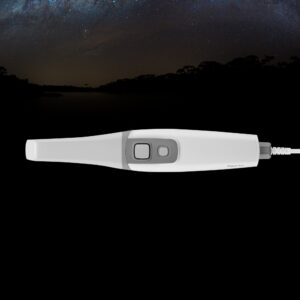
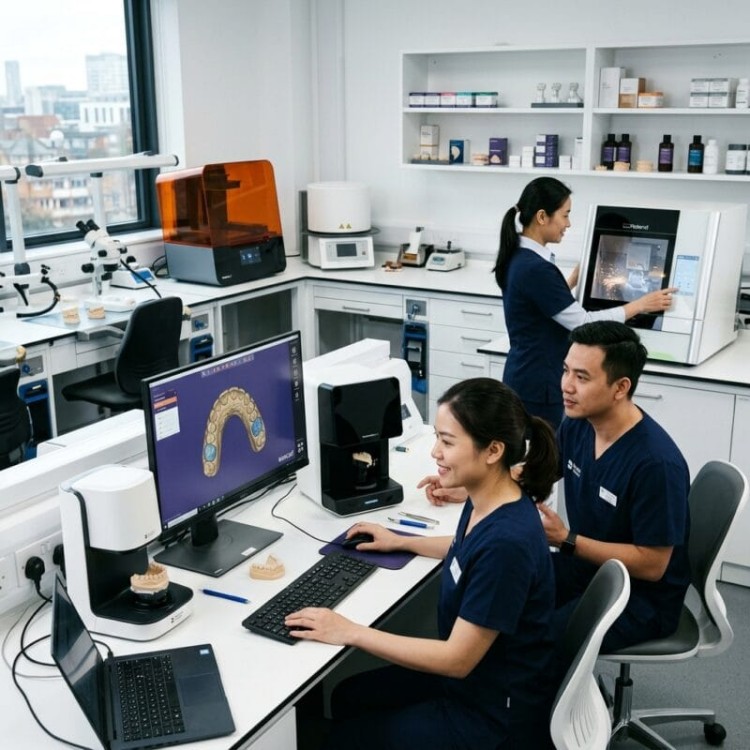
The answer is a combination of three technologies working together: digital scanning, real-time design software, and in-office or same-day milling. First, a handheld scanner captures a 3D model of the prepared tooth in a few minutes, replacing the old putty impression entirely. Second, design software, sometimes running right there in the clinic, sometimes routed to a remote design team, builds the crown digitally, matching your bite and the shape of neighboring teeth. Third, a small milling unit carves the final restoration out of a ceramic block, sometimes while you wait in the next room.
Not every clinic has an in-house milling machine, and that’s fine, it’s expensive equipment that doesn’t make financial sense for every practice size. What’s changed is that the design step, which used to be the real bottleneck, can now be handled remotely almost instantly. A file goes out to a specialized 3d dental lab, comes back designed and approved within hours rather than weeks, and is then milled either in-office or at a nearby facility.
This matters beyond convenience. Same-day or next-day restorations mean fewer total appointments, less time spent in a temporary crown that was never meant to last, and lower odds of the temporary coming loose or causing sensitivity in the interim.
It’s worth saying plainly: speed only matters if quality holds up, and the clinics doing this well aren’t cutting corners on design review to hit a faster timeline. The technology has simply gotten good enough that fast and careful are no longer in tension the way they used to be.
If speed matters to you, it’s worth asking your dentist how their same-day process actually works before assuming every fast turnaround is created equal, since the underlying quality checks can vary quite a bit between practices.