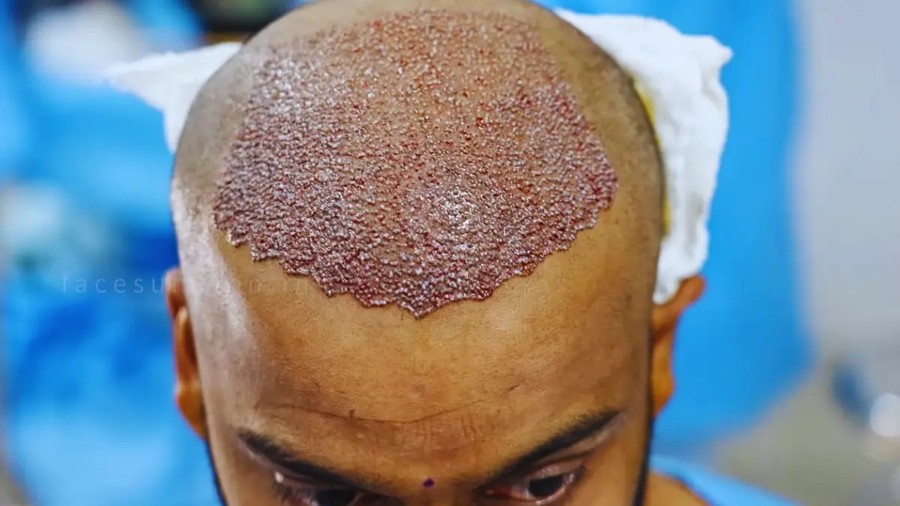
It takes much more than just shifting follicles from one area of the scalp to another for a hair transplant to be effective. Whether the final product seems organically thick or distinctly manufactured depends on how individual follicular units are chosen, distributed, tilted, and positioned. Because the scalp does not normally have hair at the same densities everywhere, follicular dispersion is particularly significant. Careful planning based on the patient’s current hair, donor supply, hair loss pattern, and long-term restoration objectives is necessary to replicate these slight differences.
Comprehending Follicular Patterns In Nature
Follicular units, which may have one, two, three, or sometimes more hairs, are where human hair develops. Rather than being grouped in a consistent way, these units are naturally dispersed across the scalp. Instead of making rows or using the same kind of graft all across the treatment region, a smart transplant strategy aims to replicate this irregularity.
Before determining where each graft should be placed, clinics that provide hair transplants UK may evaluate the distribution of single and multiple hair follicular units. Because they may help create a gentler transition between the forehead and heavier regions behind it, single hair transplants are often very helpful around the front.
How To Make A Gradual Hairline
One of a transplant’s most visually significant features is the frontal hairline. Rarely do natural hairlines start with a sudden wall of dense hair. Rather, regions with higher density tend to develop gradually after finer individual hairs toward the leading edge.
This effect can be replicated with follicular dispersion. Visual depth may be created by positioning bigger units further back and single follicular units closer to the front. The hairline may also be kept from being too symmetrical by making minor spacing adjustments. This method acknowledges that tiny abnormalities seen in natural development contribute to a genuine look.
Utilising The Donor Area Effectively
There are just so many follicles in the donor location that can be transported securely. Because of this, distribution is just as much about managing resources as it is about aesthetics. Instead of just trying to cover every diminishing region equally, surgeons must decide where grafts will have the most visible advantage.
Since the quantity of grafts needed and the intricacy of the process may have an impact on total treatment planning, this factor may also affect hair transplant costs. A person desiring very minimal hairline restoration could need a different distribution method than someone with significant hair loss. Sometimes, strategic placement may provide the appearance of more coverage without having the same density across the scalp.
Distribution Matching To Various Scalp Zones
Different methods are needed for different parts of the scalp. In general, the direction of hair around the temples differs from that of hair at the top of the head. Because follicles sometimes develop in a spiral or whorl form, the crown poses an additional obstacle.
Because of this, determining how many follicles belong in each place is just one aspect of effective distribution. Additionally important are their direction, angle, and interaction with neighbouring hairs. Inappropriate placement might cause transplanted hair to stand abnormally or interfere with the natural growth pattern.
Density And Future Hair Loss In Balance
The likelihood that non-transplanted hair may continue to thin over time should be taken into consideration when transplanting hair. Years later, an imbalanced look may arise from creating very high density in a limited location while neglecting the likelihood of a future recession.
Thus, knowing why long-term planning is a crucial component of follicular distribution may be helpful to those looking into hair transplants London. A cautious approach may improve regions that now have the most cosmetic effect while preserving donor follicles for possible future surgeries. This choice may be influenced by donor availability, age, current density, and familial hair loss trends.
Maintaining Visual Continuity
Instead of appearing as a separate repaired region, a transplant should mix in with the surrounding hair. Carefully transitioning between transplanted regions and existing follicles is necessary to achieve continuity. While growth direction should complement nearby hair, density should alter gradually.
In the end, precise follicular distribution integrates anatomy, aesthetics, and cautious handling of a limited supply of donors. Transplanted hair may more easily blend in with preexisting growth when graft kind, spacing, direction, and density are designed together. Instead of considering each follicle as a separate entity, the scalp should be designed as a linked visual pattern to get the best outcomes.