By Dr. R.K. Mishra, Director, World Laparoscopy Hospital
For decades, the field of robotic surgery was defined by a single name and a prohibitive price tag. The dream of precision-guided, minimally invasive surgery was a luxury reserved for the world’s wealthiest healthcare institutions. But today, a quiet revolution is unfolding in India—one that is not just catching up to the West, but in some ways, leapfrogging it.
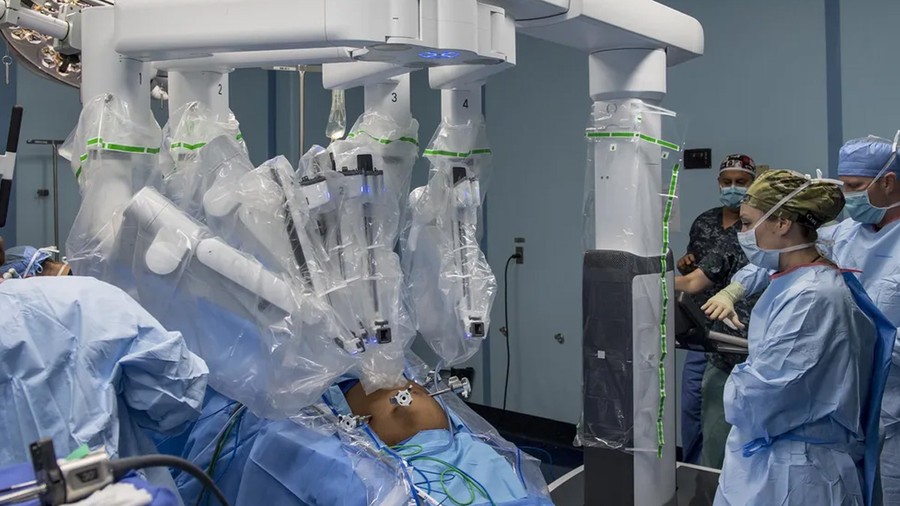
At World Laparoscopy Hospital, we recently achieved a milestone that sounds like science fiction but is now a documented medical reality: successful human telesurgery performed over a standard 5G connection using the SSI Mantra surgical robot. This isn’t just a technical win; it is a moment of “Sovereign Robotics”—the realization that India can build, control, and distribute the future of surgery on its own terms.
In the rapidly evolving field of Minimal Access Surgery, structured training and standardization are essential to ensure patient safety and surgical excellence. Over the past two decades, World Laparoscopy Hospital (WLH) has emerged as a global leader and pioneer in Laparoscopic surgery training and robotic surgical education. With its headquarters in Gurugram, India, and international centers in Dubai and the United States, WLH has played a transformative role in shaping modern surgical training.
Historical Evolution and Vision
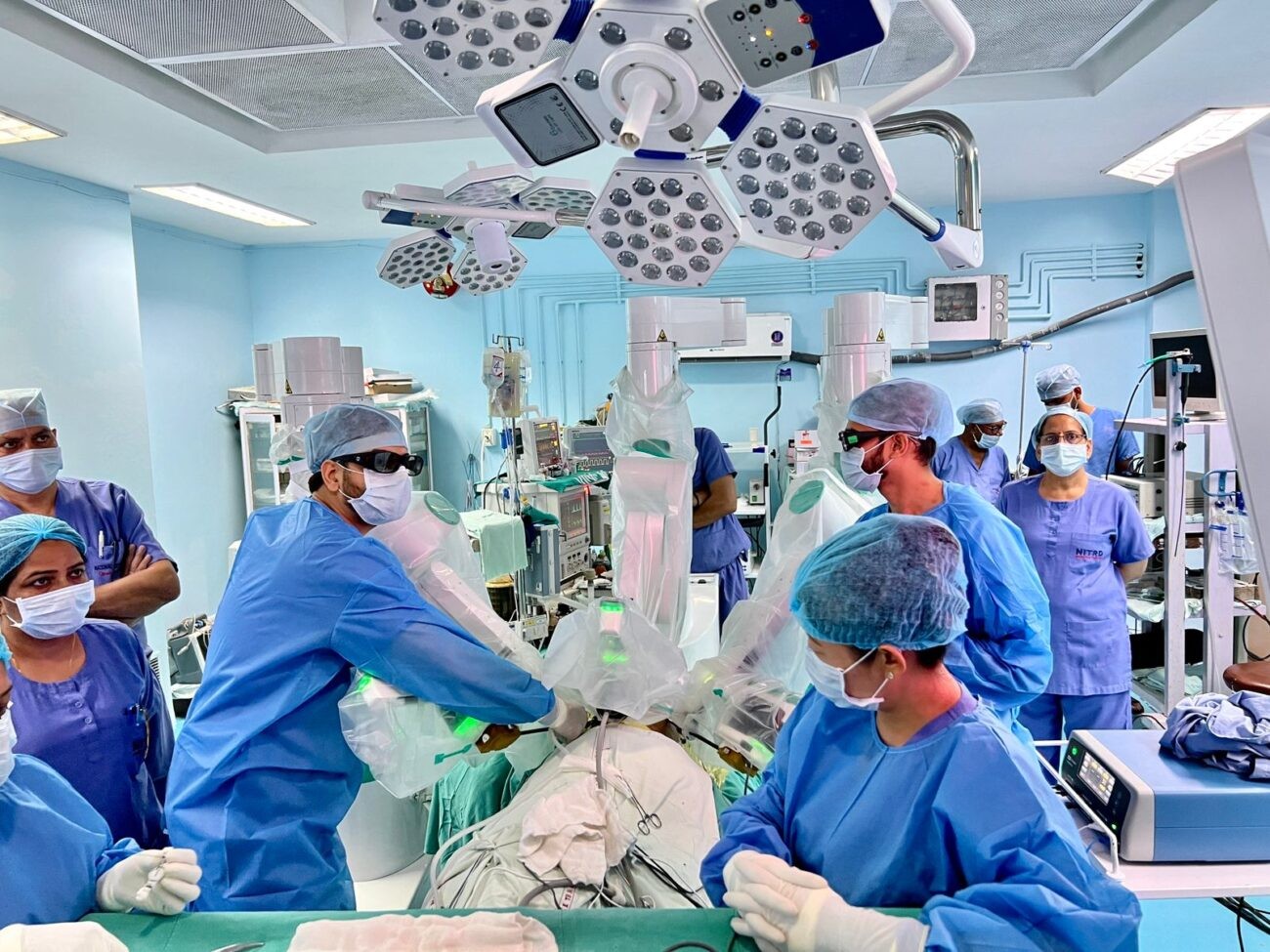
World Laparoscopy Hospital was established with a clear mission: to provide safe, ethical, and structured training in laparoscopic and Robotic surgery training to surgeons and gynecologists worldwide. At a time when minimal access surgery was still gaining acceptance in many regions, WLH recognized the urgent need for standardized teaching modules, simulation-based training, and evidence-based surgical practice.
Under visionary leadership, the institution integrated academic rigor with hands-on operative exposure, creating a unique blend of theory, simulation, and live surgical training.
The Mantra of Accessibility
The SSI Mantra, developed by Dr. Sudhir Srivastava and his team, represents more than just engineering excellence. It represents a paradigm shift in accessibility. By designing a system that is modular, open-frame, and significantly more cost-effective than its predecessors, SSI has created a tool that can actually fit into the diverse healthcare landscape of India.
Beyond the Four Walls: The Power of Telesurgery
The true “Holy Grail” of robotic surgery has always been the ability to bridge distance. Last year, our team at World Laparoscopy Hospital demonstrated that a surgeon could operate on a patient located miles away with near-zero latency. Using a secure 5G network, we utilized the SSI Mantra to perform complex maneuvers where the doctor’s hands and the robot’s arms were in two different locations.
This capability is the ultimate democratizer. It means that the highest level of surgical expertise can now be delivered to a rural clinic in Bihar or a community hospital in Tamil Nadu, without the patient having to travel to a metropolitan hub.
A New Era for Global Surgery
As we train the next generation of surgeons from over 100 countries at WLH, the message is clear: robotic surgery is no longer an “elite” discipline. India is leading the way in showing the world that high-tech healing can be affordable, remote-capable, and locally manufactured.
The “Mantra” for the future is clear: Every patient, regardless of geography or income, deserves the precision of a robot and the touch of an expert. Today, that future is made in India.
Integration of Robotic Surgery
With the advent of robotic platforms, WLH expanded its academic infrastructure to include robotic surgical training. Robotic simulation modules, console training, and live case demonstrations have enabled surgeons to transition smoothly from conventional laparoscopy to robotic-assisted procedures.
The institution has consistently emphasized that robotic surgery is an extension of laparoscopic principles, not a replacement—thus maintaining strong foundational training.
Global Recognition and Academic Contribution
World Laparoscopy Hospital has trained thousands of surgeons from more than 100 countries. Its alumni serve in leading hospitals and academic institutions across the globe.
The institution is academically associated with global surgical bodies, including:
Furthermore, its academic contributions extend to peer-reviewed publications, surgical textbooks, online modules, and international conferences dedicated to recent advances in minimal access surgery.
Emphasis on Patient Safety
WLH’s training philosophy centers around patient safety. Surgeons are trained to:
- Respect anatomical planes
- Use energy devices judiciously
- Follow stepwise procedural protocols
- Anticipate and manage complications
- Convert to open surgery when indicated
The institution promotes a culture of humility, continuous learning, and ethical surgical conduct.
Research and Innovation
Beyond training, WLH actively contributes to surgical innovation, research publications, and the dissemination of new techniques in minimally invasive surgery. Workshops, congresses, and international collaborations ensure that trainees remain updated with global advancements.
Conclusion
World Laparoscopy Hospital stands as a pioneer in laparoscopic and robotic surgical education. Through structured fellowship programs, international collaborations, academic leadership, and a strong commitment to patient safety, WLH has significantly influenced the global landscape of minimal access surgery.
Its legacy is reflected not merely in the number of surgeons trained, but in the safe surgeries performed worldwide by its alumni—carrying forward the mission of excellence in minimally invasive and robotic surgery.